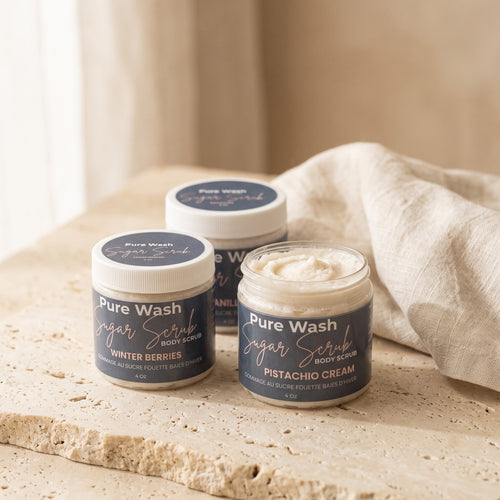
That fresh, polished feeling after a body scrub can be satisfying - until your skin starts to sting in the shower or looks pink long after you rinse. So, can sugar scrubs irritate skin? Yes, they can, but that does not mean sugar scrubs are automatically harsh or wrong for your routine. It usually comes down to your skin type, how often you exfoliate, the size of the sugar crystals, and what else is in the formula.
A well-made sugar scrub can leave skin feeling smooth, soft, and refreshed. But even gentle exfoliation has limits. When a scrub is too abrasive for your skin, used too often, or applied to already sensitive areas, irritation can show up quickly.
Can sugar scrubs irritate skin on everyone?
Not equally. Some people can use a sugar scrub once or twice a week with no trouble at all, especially on areas like elbows, legs, or feet. Others notice redness after one use, particularly if their skin is dry, reactive, acne-prone, or already compromised.
Sugar is often seen as a gentler physical exfoliant than rougher alternatives because the crystals can soften slightly with water as you massage them over the skin. That said, “gentler” does not mean irritation-proof. If the grain is coarse, the pressure is too firm, or the skin barrier is already stressed, even a sugar scrub can feel like too much.
Face and body also matter here. A scrub that feels lovely on knees and heels may be far too aggressive for the face, chest, or neck. Skin thickness varies across the body, so the same product can feel completely different depending on where you use it.
What actually causes irritation from a sugar scrub?
Most irritation comes from friction, frequency, or formulation.
Friction is the obvious one. Physical exfoliation works by manually lifting away dull surface buildup, but if you rub too hard, you create tiny disruptions in the outer layer of skin. That is when burning, redness, and tenderness can start.
Frequency is another common issue. People often assume that if exfoliation makes skin feel smooth, more exfoliation will make it even better. Usually, the opposite happens. Over-scrubbing can weaken the skin barrier, leaving skin tight, flaky, sensitive, or more reactive to products that never used to bother it.
Formulation matters just as much. A sugar scrub is not only sugar. It may also include oils, butters, essential oils, fragrance, botanical extracts, or preservatives. Sometimes the irritation is not from the exfoliation itself but from a scented ingredient or active blend that your skin does not tolerate well.
Signs your sugar scrub is too harsh
A little temporary pinkness can happen after exfoliation, especially if you are in a warm shower. But there is a difference between mild, short-lived flushing and true irritation.
If your skin feels raw, burns when water hits it, stays red for hours, becomes itchy, or starts flaking the next day, your scrub may be too harsh or too frequent for your routine. Breakouts can also happen, especially if the skin is inflamed or if a rich oil blend does not agree with your skin.
Another clue is when the rest of your routine suddenly starts to sting. If your lotion, body butter, or soap feels uncomfortable after using a scrub, that can mean the skin barrier has been pushed too far.
Who should be extra careful?
People with sensitive skin should be the most cautious, but they are not the only ones. If you have eczema, rosacea, psoriasis, active acne, recent shaving irritation, sunburn, or any broken skin, a sugar scrub can make things worse.
Skin can also become temporarily more sensitive in dry winter weather, after too much sun, or when you are using strong skincare actives like retinoids, benzoyl peroxide, or exfoliating acids. In those moments, even a product that usually works for you may suddenly feel too intense.
This is where a simple, clean formula can make a real difference. Small-batch body care with skin-loving oils and fewer unnecessary extras may be easier for many people to tolerate than heavily fragranced, mass-market scrubs. Still, even a thoughtful formula needs to match your skin’s current condition.
How to use a sugar scrub without irritating your skin
The best approach is gentle and consistent, not aggressive.
Start with damp skin, not dry skin. Wet skin gives the scrub more slip and helps reduce drag. Use a small amount and massage lightly with your hands in circular motions. You should not need pressure to get results. Let the scrub do the work.
Keep your exfoliation brief. A minute or two on rougher body areas is usually enough. Spending too long scrubbing one spot often leads to irritation rather than smoother skin.
Rinse well, then follow with a nourishing moisturizer or body oil while the skin is still slightly damp. Hydration helps support the skin barrier after exfoliation.
For most people, once a week is a comfortable starting point. Some can tolerate twice a week on the body. Very few people need more than that, and many sensitive skin types do better every other week.
Where sugar scrubs work best
Sugar scrubs tend to shine on the body rather than the face. Areas like elbows, knees, heels, and dry patches on the legs often benefit the most because the skin there is thicker and more prone to buildup.
The chest and neck usually need a lighter touch. The face needs even more caution. In many cases, a gentle cleanser and a mild chemical exfoliant are better options for facial skin than a physical scrub.
If you do choose a sugar scrub for body care, think of it as a targeted treatment instead of an all-over daily habit. That mindset alone can help prevent a lot of irritation.
Choosing a better sugar scrub for sensitive skin
If your skin is easily upset, look for a formula with finer sugar crystals and a balanced oil base. The texture should feel cushiony, not scratchy. Ingredient lists also matter. Products with simple, recognizable ingredients are often easier to evaluate.
Fragrance is one of the biggest variables. Some people enjoy scented body care with no issue, while others do far better with low-fragrance or fragrance-free options. Essential oils can also be irritating for certain skin types, even in natural products, so natural does not always mean universally gentle.
A patch test is worth the extra minute. Try the scrub on a small area first and wait a day to see how your skin responds. That is especially helpful if you already know your skin is reactive.
At Pure Wash, that idea of gentle, intentional body care matters. A handcrafted product should feel good on the skin, not leave you wondering if you overdid it.
When to skip the scrub altogether
Sometimes the best choice is to pause exfoliation.
If your skin is already inflamed, freshly shaved, sunburned, peeling, or unusually dry, scrubbing usually adds stress instead of comfort. The same goes for skin that is healing from a rash or breakout. In those moments, barrier support is more helpful than exfoliation.
Use a gentle cleanser, keep moisture levels up, and let the skin settle before bringing a scrub back into the routine. Smooth skin is nice, but calm skin comes first.
The trade-off: smooth results vs. skin comfort
Sugar scrubs can be a lovely part of body care when they are used thoughtfully. They offer immediate softness and can help prep skin for lotion, body butter, or self-care moments that feel a little more polished. But there is always a balance between exfoliating enough to smooth the skin and exfoliating so much that the skin becomes reactive.
That balance looks different for everyone. Oily, resilient skin may handle regular scrubbing with ease. Dry or sensitive skin may only want occasional exfoliation and a very soft touch. There is no prize for using a scrub more often than your skin can handle.
If your skin feels comfortable, looks healthy, and holds onto moisture well after using a sugar scrub, that is a good sign your routine is working. If it feels tight, stingy, or irritated, that is your cue to scale back, switch formulas, or give your skin more recovery time.
The best body care routine is not the most intense one. It is the one that leaves your skin feeling smooth, cared for, and comfortable enough to ask for it again.